How Is Dry Ice Made? Temperature & Facts (UK)
Dry ice is solid carbon dioxide (CO₂). It is made industrially by turning carbon dioxide gas into a liquid under pressure, then releasing that pressure so the liquid turns into CO₂ snow, which is pressed into pellets or blocks. Its surface sits at about -78.5°C, and instead of melting it turns straight back into gas. You can't make it safely at home. This guide covers how it is made, how cold it gets, how to store it, and how to order it in London.
| Dry ice at a glance | |
|---|---|
| What it is | Solid carbon dioxide (CO₂) |
| Temperature | About -78.5°C (-109.3°F) at normal air pressure |
| What happens as it warms | It sublimates: solid turns straight into CO₂ gas, with no liquid |
| Common uses | Fog and smoke effects, shipping and cold chain |
| From Nice Ice | 5kg packs at £45, minimum 10kg, at least 2 days' notice |
What dry ice is
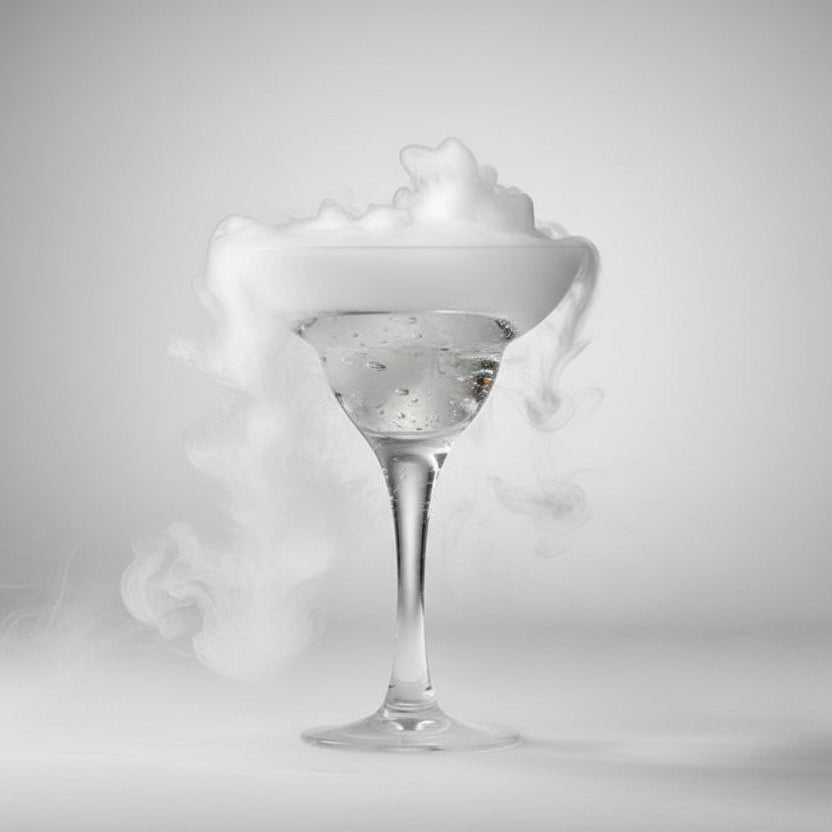
Dry ice is carbon dioxide, the same gas we breathe out, frozen into a solid. At normal air pressure it has no liquid stage, which is where the name comes from: as it warms up it doesn't leave a puddle. It simply shrinks as it turns back into gas. That is why it is useful for fog effects and for keeping goods cold in transit without meltwater.
How dry ice is made
Dry ice is made in specialist plants with pressurised equipment. In simple terms, the process has four steps:
- Collect the CO₂. Carbon dioxide gas is collected, often as a by-product of other industrial processes.
- Turn it into a liquid. The gas is compressed and cooled until it becomes liquid CO₂, which is stored under pressure.
- Release the pressure. When the liquid is let out to normal pressure, part of it turns to gas very quickly. That rapid change cools the rest so much that it freezes into fine CO₂ snow.
- Press it into shape. The snow is compressed into pellets or blocks, ready to pack and ship.
Dry ice temperature and why it sublimates
At normal air pressure, dry ice is about -78.5°C. For comparison, a home freezer usually runs at around -18°C. Because there is no liquid stage, dry ice turns straight from solid to gas as it warms. This is called sublimation.
Two things follow from this, and both matter for safety:
- It can cause cold burns. Never touch dry ice with bare skin. Use insulated gloves or tongs.
- It releases CO₂ gas. The gas is heavier than air and collects low down, so always use dry ice in a well-ventilated space.
Our dry ice safety and handling guide covers this in full. Every dry ice order asks you to confirm you have read it.
Why you can't make dry ice at home
A home freezer is nowhere near cold enough, and dry ice can't be made by freezing anything in it. Making it needs liquid CO₂ held under high pressure and equipment built to release it safely. Home attempts using gas cylinders or fire extinguishers mean handling high-pressure gas, with real risks of cold burns and CO₂ building up in a room. It is far simpler, and safer, to buy dry ice from a supplier when you need it.
How long dry ice lasts and how to store it
Dry ice starts to sublimate as soon as it is made, so how long it lasts depends on the amount, the container and how often you open it. Our guide on how long dry ice lasts goes into detail. The basics of storage:
- Keep it in an insulated box, such as a polystyrene or cool box, with the lid resting on top rather than sealed.
- Never put it in an airtight container. The gas builds pressure and the container can burst.
- Store it in a well-ventilated area, not a small closed room, and don't travel with it in a closed car cabin.
- Keep it away from children and pets.
- Plan your delivery close to the day you need it.
To get rid of leftover dry ice, leave it to sublimate in a well-ventilated place outdoors, away from people. Don't put it down a sink, drain or toilet, and don't put it in a bin.
Where to buy dry ice in London
Nice Ice supplies dry ice across London from our base in Tottenham, N17. How it works:
- 5kg packs at £45.
- Minimum order 10kg (2 packs).
- At least 2 days' notice.
- Safety tick required: you confirm you have read our safety guide when you order.
- Dry ice does not count towards the 5 bags needed for free delivery.
Popular uses include low-lying fog for first dances, Halloween and stage shows (see dry ice fog effects and wedding ice delivery), and keeping goods cold in transit (see how to ship with dry ice). For product details, visit our dry ice London page. Check your postcode on our delivery areas page, or ask for a quote for larger or regular orders.
Ready to order? Start your order here, giving at least 2 days' notice for dry ice.
Dry ice: FAQs
Can you make dry ice at home? No. Dry ice is made from liquid carbon dioxide held under high pressure, using specialist equipment. A home freezer runs at around -18°C, far warmer than dry ice, and home attempts with gas cylinders carry real risks.
What temperature is dry ice? About -78.5°C (-109.3°F) at normal air pressure. Always handle it with insulated gloves or tongs, never bare skin.
How long does 5kg of dry ice last? There is no single answer. It depends on the container, the room temperature and how often the box is opened. A well-insulated box with a loose lid slows it down. See our dry ice lifespan guide.
How do you dispose of leftover dry ice? Leave it to sublimate outdoors in a well-ventilated spot, away from people, children and pets. Don't put it in a sink, drain, toilet, bin or sealed container.